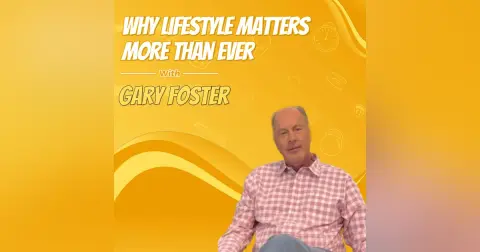
Why Lifestyle Matters More Than Ever with Dr. Gary Foster

 Apple Podcasts

 Spotify

 PocketCasts

 Castbox

 Amazon Music

 Podchaser

 RSS Feed
If you've ever been told lifestyle change is the key to losing weight, this episode might make you rethink the job we've been asking lifestyle to do. Now that powerful medications can produce substantial weight loss, what is healthy eating and movement really for?
Join Holly and Jim as they sit down with Dr. Gary Foster, a clinical psychologist who has spent decades studying behavioral weight management. He has led academic research programs, served as chief science officer at WW (formerly Weight Watchers), and is now chief scientific officer and head of clinical and medical affairs at Lingo, a division of Abbott. Gary has seen lifestyle treatment from every angle, and he makes the case for reinventing it, not abandoning it. You'll hear what behavioral science got right, what it got wrong, and why lifestyle may matter more than ever, even when the scale isn't the point.
Whether you're on a GLP-1 or just curious about where weight management is heading, you'll gain practical ideas and a more hopeful outlook. It's not medications or lifestyle. It's medications and lifestyle.
Discussed on the episode:
- The question that may change how you think about lifestyle programs: have we been asking them to do the wrong job?
- What decades of behavioral science got right, and the surprising things it missed
- Why Gary says "some is better than none" when it comes to tracking, and a realistic way to build awareness without logging everything
- The "I wonder…" mindset shift that makes healthy habits feel lighter.
- The two signals, beyond the number on the scale, that Gary suggests paying attention to
- Why eating less and eating better are not the same thing, and what people on these medications are asking for help with
- A simple behavior that may be easy to overlook when your appetite and thirst cues change
- The one habit Gary says predicts who keeps weight off, and why no pill or injection can teach it.
- Gary's advice if you haven't exercised in years (hint: it starts smaller than you think)
- What we really know, and don't yet know, about life after stopping a medication.
- Why planning for "what happens when I reach my goal" is worth doing now
- Where obesity rates and prevention may be headed
- Rapid-fire questions, including Gary's most overrated piece of weight loss advice and the one thing GLP-1s changed his mind about
- The two habits Gary thinks everyone should prioritize, regardless of weight
00:37 - Rethinking Lifestyle in the Medication Era
04:19 - What Behavioral Treatment Gets Right—and Wrong
09:24 - Measuring Success Beyond the Scale
12:41 - The New Challenge of Weight Maintenance
16:11 - Redesigning Lifestyle Around GLP-1s
22:20 - Tracking Glucose, Food Noise, and Progress
26:32 - Activity, Energy Balance, and Health
28:41 - Making Awareness Sustainable
33:00 - Medication Access and Obesity Prevention
36:28 - Listener Questions: Starting Exercise
38:27 - Planning for Life After Medication
42:35 - Rapid-Fire Treatment Insights
44:36 - The Human Side of Behavior Change
45:42 - Why Lifestyle Still Matters
James Hill:
Welcome to Weight Loss And, where we delve into the world of weight loss. I'm Jim Hill.
Holly Wyatt:
And I'm Holly Wyatt. We're both dedicated to helping you lose weight, keep it off, and live your best life while you're doing it.
James Hill:
Indeed, we now realize successful weight loss combines the science and art of medicine, knowing what to do and why you will do it.
Holly Wyatt:
Yes, the “And” allows us to talk about all the other stuff that makes your journey so much bigger, better, and exciting.
James Hill:
Ready for the “And” factor?
Holly Wyatt:
Let's dive in.
James Hill:
Here we go.
Holly Wyatt:
Jim, we've spent decades developing lifestyle programs to help people lose weight, to help them keep it off. And we've taught people what to eat, how to exercise, when to exercise, how to set goals, how to change their behavior. But lately, I've been wondering something. What if we've been asking lifestyle to do the wrong job?
James Hill:
Yeah, Holly, that's an interesting question. Most of our careers, we've judged the success of lifestyle programs primarily by how much weight people lose. We've learned a lot about what works, but we've also learned how difficult it is to achieve and maintain substantial weight loss through lifestyle alone.
Holly Wyatt:
Exactly. But now that we have medications that can produce substantial weight loss, maybe it's time that we rethink what we're actually trying to accomplish with lifestyle treatment.
James Hill:
Yeah, and maybe there's an even bigger question. Have we been so focused on getting people to lose weight that we've overlooked some of the most important benefits of changing how they live?
Holly Wyatt:
And if that's true, should we be designing maybe completely different lifestyle programs for people taking these medications? The medications have changed so much. Maybe we need to change the lifestyle piece.
James Hill:
And that's what we want to explore today. So if we were starting from scratch, knowing everything we know right now, would we design lifestyle interventions the same way?
Holly Wyatt:
Yeah. What would we do differently?
James Hill:
We've got the perfect person to help us explore this, Dr. Gary Foster. And Gary is a friend and collaborator and someone who has contributed enormously to obesity research.
James Hill:
He's a clinical psychologist, and he spent decades studying behavioral weight management. He's really had quite a varied past. He's led academic research programs. He served for several years as chief science officer at WW, formerly Weight Watchers, and now he's chief scientific officer and head of clinical and medical affairs at Lingo, a division of Abbott. What makes Gary particularly interesting is that he's seen lifestyle treatment from so many different perspectives: developing the science, delivering programs to millions, and he's currently working at the intersection of behavioral technology and metabolic health. He trained at University of Pennsylvania with two pioneers in weight loss research, Mickey Stunkard and Tom Wadden. And he comes from a really, really long lineage of strong behavioral treatment. And Gary, you've been part of this field through some pretty dramatic changes. And we're really interested in your thinking about lifestyle. And welcome to Weight Loss And.
Gary Foster:
Thanks, Jim. Thanks, Holly. Nice to be with you both.
Holly Wyatt:
Yeah, we're excited because you've done it all. I mean, you have seen this.
James Hill:
He's done it all.
Holly Wyatt:
Yeah. So rarely do we get someone who can really talk almost about anything because you've done so much during your career.
Gary Foster:
Thank you. That's kind.
James Hill:
Okay, Gary. So let's start with the big picture with what we've learned. We've spent decades studying lifestyle interventions. I know you've developed personally several behavioral programs trying to help people make lasting changes. After all that work, what have we gotten right and what have we gotten wrong about lifestyle treatment?
Gary Foster:
Well, it's a lot to think about.
James Hill:
I know, I know.
Gary Foster:
I think it's a really good question.
James Hill:
And we'll break it down as we go through.
Gary Foster:
Yeah, yeah. And I really like the way the beginning of the conversation got framed about now that we have these much stronger new gen meds, should we rethink the role of behavioral treatment? And I'll start with, and we'll dive into it, of course, but I think the answer is absolutely yes. But to go back to your question, I think what we've gotten right is that we've used the science of behavior change to help people make changes that are, let's say, relatively reproducible in a six to 12-month time period. And those examples would be that you need to be aware of your behavior to change your behaviors. So basic things like self-monitoring. Easier said than done. But whether you're trying to manage your finances, your work performance, your relationships, your weight, your glucose, being aware and keeping track of things really does matter. It's not enough, but if you're not paying attention to the behaviors you're trying to drive, you're not going to be able to change them. You're not going to get a sense of progress. You're not going to get a sense of where there are, of course, inevitable setbacks. So I think that's one principle thing that we've really gotten right, that we focused, and the empirical data would support this, not just conceptual papers, that the more people in behavioral weight management, we would say track or log, but pay attention to their behavior, the better they do.
Gary Foster:
So I think that's one key thing that we've gotten right. I think the other thing we've brought into behavioral treatment, particularly in the last 10 or 20 years, is this idea that it's not all about what you do, but it's about what you think. So the aspects of dealing with setbacks, knowing that they're inevitable. Again, this broadens from weight loss to glucose management to relationships. It doesn't make any difference. When you're trying to change a behavior, no journey that I can think of is absolutely linear. You make progress every day, every week, every month. Good luck. Like that's a very nice concept. It never happens. And I think what behavioral treatment has gotten right is to teach people the fancy smanshy jargon, cognitive restructuring, changing the way you think, so that you can change what you do and normalizing those setbacks. They're expected. It's not about that they happen, but it's what you're going to do next. Those kind of shorthand cognitive behavioral treatments, I think, are another thing that we've gotten really right.
Gary Foster:
Now to the list of things that may not be so correct. I think one is that it wasn't necessarily incorrect, but it's stated now. Behavioral treatments were largely designed to induce an energy deficit because they got weight loss. That was the name of the game. At the time, it was short of surgery. It was the best, most scalable, effective way to get people to lose weight. So I wouldn't say it was wrong, but it certainly is not relevant in these times. I think sometimes what we got wrong, although treatment providers never said this, I think there was maybe an institutional or societal belief that if you're doing behavioral treatment for obesity, it meant it was largely a behavioral problem. Fix the problem, fly straight, eat well, move more, and this will be fixed. And we know so much now that you two have contributed significantly to around the biology of obesity. This is not an infinitely malleable condition. That you can just change by what you eat and move. Now, eating and moving definitely does have an impact. Let's not take a point of therapeutic nihilism that we can't do anything about it, but it doesn't account for all of the variants. So I think that's one of the things that could have been better.
James Hill:
Boy. Holly, he is singing our tune here. Holly and I, Gary, recently have started talking about the complete weight journey, which is not just the weight loss phase that we talk about. What happens before that? What happens after that? Because this curve where you lose weight and then weight stays flat the rest of your life. It's way messier than that. And the other thing I think you hit on, it's about your life. I mean, you aren't going to change your weight permanently unless you change your life.
Holly Wyatt:
The other thing I heard you say that I think is so important and we talk about is this relationship between behavior and biology. And you were just saying if we're doing behavioral treatment, it must be just behaviors, but we know that they are hooked together. Biology influences behaviors and behaviors influences biology or physiology, whatever term you want to use. And I think we've studied them separately. And you're right, even in the clinical field, we tended to separate and say, okay, if it's a behavioral problem, here's a behavioral treatment. You can't separate the two which I think is important for people to realize. And even scientists sometimes, I think, get into one section or just study the physiology or just study the behaviors and really miss out on that complex interaction, that, to me, is really how it works in the real world.
Gary Foster:
Yeah, I think that's well said.
James Hill:
Gary, do you think that we focus too much on weight loss as the primary outcome of our treatments.
Gary Foster:
That's a tough one. I think in some ways to be empirical about it, when people who live with obesity lose weight, a lot of good things happen. While these new medications do have some positive effects or independent of weight, weight loss does matter. So I think to be just like, oh, we don't care about weight and that's not a defensible position scientifically. So weight loss does matter. I think I would reframe it slightly differently. Have we over-indexed on that and not paid attention to any non-weight loss outcomes? I think that's a fair criticism of where the field has been and still is. You still see reports from investors saying that we're concerned because one medication got a 25% weight loss and the other got a 22% weight loss. Like, really, what's the 3% weight loss make? I'm no finance expert, but I'm speaking to your point around, are we over-indexing on weight? So I think we're over-indexing on it, but I wouldn't want that to be interpreted as weight loss doesn't matter. Like, there's 80 years or more of research that's saying that higher BMIs, excess adiposity is associated with people getting sicker and dying earlier. We can't just snap our fingers and act like those data don't exist. So, it's a risk factor. It needs to be managed. As it goes down, a lot of other things get better. But is it the only measure? No. And to your earlier point, your life, your quality of life is not measured by a number on a scale.
James Hill:
It's a lot to unpack here, Holly.
Holly Wyatt:
Definitely. Let me word the question a little bit differently. We've been talking about this on the show a lot. If all that changed was a number on the scale, and maybe the medical side of things that go with it, the risks, but if that was all that changed, would you consider that a success?
Gary Foster:
I think it'd be a partial success, right? And what you'd have to say, I think being realistic about it is that if you had somebody who had type 2 diabetes, coronary artery disease, obstructive sleep apnea, you all know the list longer than I do. And those things get better, that's going to affect somebody's quality of life. I think it's part of the story. It's not all of the story. And the bigger point about life in general is the impact on social relationships, your impact on your self-esteem, the impact on your ability to talk to yourself kindly, the impact to deal with the multiple sources of stigma that you have endured living with obesity. How do you navigate that? And especially in the context of these new meds that produce large weight loss. And what do we think about non-weight outcomes? What do we think about, and this is borderlines on medical, but I think its benefit is that it goes beyond the scale. You could look at things like your glucose. You could look at things like your cholesterol. You could look at lots of other medical markers that may stay relatively flat even when weight is going up and down. Flat meaning improved.
James Hill:
Right. Gary, as you know, Holly and I have been very interested in weight loss maintenance. And the problem has been, as you well know, people never lost enough weight that they were interested in weight loss maintenance. And we would hear, yeah, when I lose another five or 10 or 20 pounds, I'll talk to you about weight loss maintenance. But it's a whole different ballgame now because many people are reaching or nearly reaching their weight goals. And I think it really turns the attention to weight loss maintenance. And that now is going to be a huge challenge is keeping this weight off long term.
Gary Foster:
Absolutely. And I think there are lots of ways to do that. And I think if we think about motivationally first, then we can think about behaviorally second. Motivationally, it goes to the earlier point about how much weight loss is enough and is it the only measure? But let's say unlike before these new meds, that people actually have a weight loss goal and they meet that goal. Then the question becomes, do you do that by continuing meds, lower dosage, all the things that clinicians are good at? Or does somebody make a decision, I want to try being off the meds? And this is a condition, as you both well know, it's unlike other medical conditions, partly because it can be seen.
Gary Foster:
And there's also just this broader consumerism in the obesity management. So people will come in with very clear opinions about how long they should be on the meds, aside from the real constraints of access for finances, which I'll just park to the side, but I don't want to act like that doesn't exist. But let's assume that access was available for everybody. Some people have a disposition or a belief that they don't want to be on meds. You don't hear people coming in typically and say, “I want to get off my heart meds. I want to get off my blood pressure meds.” Some do. But but many don't. So I think we have to sort of look at that and respect individual people's choices around how they want to pursue that maintenance journey. Then I think that the calculus changes a little bit. Given that you would be stopping a powerfully biological agent, what behavioral tools are you going to have to ramp up? And hopefully not right then. Hopefully you've been doing this along the journey.
Gary Foster:
It's that you're not saying, oh, I'm on the meds six, eight months. I haven't paid a bit of attention to physical activity. I haven't paid a bit of attention to the quality of my diet. And now is the time to sort of, voila, bring that out of the tool chest or the toolbox. So I think that's one way to think about it. And then the other thing is from a behavioral point of view, and you two have been instrumental in documenting this in the literature, I don't think the data as are clear post medications just because of the newness of the field. But I'd be surprised if it doesn't persist on or off meds, that physical activity is the single best predictor of who keeps weight off and who doesn't. And there is not a medication, an injection, a pill that teaches people how to be more active. And that's largely where I think behavioral treatment can still have a big impact. And it's also got so many other benefits independent of weight. Independent of weight, I know I'm preaching to the choir, to you two, but for the benefit of the broader audience, physical activity in and of itself, if your weight never changed, has dramatic impacts on 10 or 15 different conditions and on overall mortality. So that's a really big part of maintenance that goes to your earlier point about what's on the scale.
James Hill:
I love it, Holly. He's singing our song.
Holly Wyatt:
Well, I think this really feeds into this reinventing or rethinking lifestyle now that we do have access to more powerful drugs than we've had in the past. And I do agree with you. I think something you said earlier, we focused a lot on creating weight loss with our behavioral programs. And now we can reinvent and think a little bit differently what we might want to focus on because we have another tool. But here's something we've been talking about that kind of depressed me a little bit, Gary, is I had hoped, that perhaps when cravings were lower or appetite was lower, then people might start making better choices about their diet or when their knees didn't hurt because they've lost 30 pounds, they might start moving a little bit more. And so far the data, we don't really have great data, but that may not be happening automatically. So to me, that's kind of a great point. Maybe, do you think, is that what we focus on? And I love that you say, don't wait to the end. So many people think, I'll deal with this after I get the weight off. And I think that's not a recipe for success. I do think thinking about it from the beginning is helpful. What are your thoughts on kind of reinventing lifestyle and what we're doing? Maybe not what we're saying, but maybe why we're saying it or how we're introducing it?
Gary Foster:
I think it's a little bit of both. I think it is a reinvention for sure. So I think let's start with what it's not. It's not about producing incremental weight loss. So I can't imagine a world in which you provide behavioral treatment and it takes a 20% weight loss and makes it 25. The medications are so powerful in reducing appetite and all of the other benefits they have, delaying gastric emptying, all the things that they do that I just don't see from an energy deficit point of view that there'll be a big benefit in terms of weight loss. Where behavioral treatment can help is that it can help with medication adherence. It's an area that's widely not… I don't think assessed very well, and we don't know much about that.
Gary Foster:
But as we go from medications that are dosed once a week, there are probably a dozen or more medications in the pipeline that aren't injections, but are daily medications now. Some have certain precautions about when you can take them, how you can take them, how many minutes before a meal, fluids, et cetera. So, those are behavioral problems to solve. So, I think that's one place to start. Arguably, I don't hear a lot anecdotally that people are having trouble with adherence, but I think it's an impetus for the field to say, “We've got a toolbox here of behavior change techniques that are proven. What behaviors are we trying to drive?” So that might be one to start with. I think the other, to your point, is the quality of the diet. And why I think this is ripe is this isn't a bunch of scientists sitting in a room and saying people need to eat higher quality diets while on these medications. It's actually coming from people on the meds. There's lots of consumer research that's been done. And when you ask people what they want, they say, “I need help. I know I'm eating less, but I know I'm not eating better.” They're not the same thing. So there is a recognition, a request for help with that. And even on the other parts, what we hear a lot from folks is, I've been told to eat more protein. What does that mean?
Gary Foster:
Docs are busy. They had seven minutes. Everybody knows that drill. I'm supposed to eat more protein. I'm supposed to avoid fat, greasy foods. How do I do that? That's what behavioral treatment does. It's good at that.
Gary Foster:
Importantly, it's not so you'll lose more weight. It'll be minimizing side effects. It'll be preventing nutritional inadequacies. There's a different endpoint in mind than we did pre these new medications. And certainly physical activity is still paramount in terms of behavioral target. And finally, I think hydration is, mainly because of its effects. A lot of people anecdotally report, again, I haven't seen great data on this in clinical trials, but people often mistake hunger for thirst. So as their appetite goes down, they're not drinking as much. They get dehydrated. Also, potentially makes constipation worse. You could eventually end up in the ER. That might be a dramatic case. But this isn't just generally drink water. It's good for you. I think there's a particular need in this case, and I'll defer to you, Holly, as a physician to decide if that's right or not. But anecdotally, we're hearing a lot about dehydration on GLP-1s, even if it's in a modest form. It's a relatively straightforward behavior to manage.
Holly Wyatt:
Yeah, I agree. The stimulus to drink is not there as much. And so now you've got to do it cognitively, right? The natural kind of stimulus is gone. So now you have to think about it. And that's a behavior. Yeah, I agree with you.
James Hill:
I want to highlight a couple of things that Gary mentioned for our listeners. You know, for my whole career, which has been a long time, Gary, the focus on nutrition was basically helping people lose weight. Now, the medications are doing that. So in my mind, we need to rethink what nutrition can do. And rather than saying nutrition is not important, I think it's more important than ever, because once the meds do the heavy lifting and weight loss, the nutrition is important for maximizing health, et cetera. And I also think about not just nutrition during weight loss, but during weight loss maintenance. If people are going to be on these medications for 20, 30, 40 years, you know, I just am so interested in what's happening to behavior over that long term, because we don't know much more than a couple of years out. And I'm interested in what happens there. And then the other thing, during that maintenance period, I agree with you that I don't think there's a problem with adherence during weight loss. But what about weight loss maintenance after you're not losing weight anymore? Is adherence going to be the same as when you're losing weight?
James Hill:
So a couple of things, Holly, that he said I think our listeners really need to stress.
Gary Foster:
Yeah. And I think just to build on that a little bit, Jim and Holly, So it's an interesting phase of the journey that you mentioned there, Jim, in terms of the weight loss maintenance and what other things do you want to focus in on. And I think in our experience at Abbott, what we've learned is that people are really captivated by being able to see their glucose in real time and what different types of meal patterns, what different types of activity patterns affect their glucose.
Gary Foster:
And the benefit of that in the context of a GLP-1 journey is that people have another reason to believe, right? To your point, when weight is flat and that's an outcome, we're conditioned to look at change. So you can think about it as a couple different ways, right? One is that, “Oh, I see my glucose spiked after this meal.” Hey, that kind of meal could be leading to side effects. And if not, if my glucose is chronically better than it was six months ago, that's actually quite a benefit and quite a reinforcer to continue to do the things I'm doing, whether you're on meds or not. So instead of the traditional get on the scale, eat daily, you don't know what's contributing to what, to be able to see your glucose in real time, if I walk 15 minutes after a meal or if I don't, or if I eat one third less carbs or I don't, or I change this rice for that rice, those kind of real-time impacts can be impactful. So I think glucose is a really important thing, especially through a CGM like we have at Abbott, I think makes a big difference. I think another thing that makes a difference to pay attention to is a measure of food noise.
Gary Foster:
And fortunately, there are validated measures out there, five items easy to complete. And what we're hearing anecdotally, and this could be helpful for physicians and patients to be thinking about titration decisions, is that even before weight changes, food noise starts to come back.
Gary Foster:
So that's an early signal that maybe, oh, the medications aren't as effective. Or in a scenario, when people go off the meds, to be just mindful, and I'm not saying measure it daily, maybe monthly is probably fine. We don't need to get people obsessed about things. But in general, I think looking at both glucose as a signal of a marker, both to minimize side effects and to also experience benefits other than weight loss is one thing. And then to be looking at food noise as a potential signal that the efficacy of the regimen is weakening. Or if you're off meds, to say, “Boy, I'm going to have to up my behavioral awareness here because food noise is coming back.” So I think it's a really ripe area for big impact. And both of your points earlier in the podcast, this how do we have to change our perspectives, both on weight loss and weight maintenance, given these new meds and the availability of new tools, whether it's food noise assessments or continuous glucose monitors like Lingo?
James Hill:
Gosh, Holly, I have so many questions for Gary. We're not going to get through everything in one episode, but I love that idea. So during weight loss, people are focused on the number of the scale. And then during weight loss maintenance, the idea is focus on some other benefits because we're geared toward change. And I love it. Glucose and food noise. And one of the questions, I have two issues that bother me. One, what happens long term with maintenance? For example, food noise, does it stay suppressed? Does it come back? I'm interested in that. And then one other one, Gary, that... You know, it's hard when you believe something so much and you see data that sort of suggests that may not be the case. And with physical activity, I've always believed that in order to keep weight off, you have to achieve energy balance at a high flux; high level of physical activity, high level of food intake. Now we can potentially see weight loss maintenance at low flux; low energy intake because of the meds and low energy expenditure. That baffles me.
Gary Foster:
Yeah, I'll take the second one first, probably because I know the least about it, and I feel like I'm talking to two experts, so I'll be modest in what I say about it. In some ways, when you lay out that dilemma, it's like, does it matter? And if people are getting weight maintenance, but it goes back to the other provocative thing is, is weight the only thing? And if you can get incremental benefits to fitness and overall reduction in comorbidities, diabetes, hypertension, dyslipidemia, depression, all of the great things that physical activity does, and if that's dose-dependent, then I would say maybe we should be encouraging people to get slightly higher levels of physical activity. The behavioral truism is here is that we shouldn't be coaching people, as you both know, to some, science-driven threshold, like you must get to this many minutes at this heart rate or this intensity, because if I'm not anywhere close to there now, that's a way for me to check out. So small changes in activity, building as they feel feasible and as they feel enjoyable, all the things that you two have talked about for a long time, I think is really important. That dilemma you set up is intriguing because what it signals to me is weight loss isn't the only thing here and physical activity has so many other benefits. And I might use that as the parameter for low flux, medium flux, or high flux.
James Hill:
I love it. In other words, quit looking at diet and physical activity as weight issues and focus on other aspects of those. I love that, Holly.
Holly Wyatt:
Yeah, I love it. And I think it's like, I don't think we know. We've always assumed that high flux through the system was good, and we knew the data supported that was really what was required to maintain a weight loss, and so it all lined up perfectly. Now it's like, well, what is your health like at a low flux? What other things might be affected that we don't understand, and does lower body weight override those things anyway? I don't think we know that. I think that's still left to be determined.
James Hill:
So many research questions, Gary, that are interesting out there.
Gary Foster:
Sure.
Holly Wyatt:
I want to come to a couple of questions. You talked about awareness at the beginning, and that's one of the things I preach. If you're not aware of something, you don't have the power to change it. A choice isn't there because you're not aware of it. So many of my patients have said when they go on these medications, “For the first time, I don't have to log my food. And it feels so liberating not to have to write down everything I want to eat.” And at first I was like, okay, yeah, this is good, you know, and I do like the idea of feeling liberating. But now I'm almost like, wow, we do need to pay attention to what we're eating, being aware from a nutrient standpoint, from, you know, the protein or for the, we're seeing micronutrient deficiencies. And so I guess the question is, how do we help people build behaviors now that improve their lives that they still need to work on without just giving them, here's another list of things you've got to do. That's replacing. So I don't want to just go back and say, well, we got to log. Logging is more important than it has ever been, but for a different reason. Do you kind of see what I'm saying? I think there's an opportunity here, and I want us to take advantage of it.
Gary Foster:
I do. Yeah. No, the setup is accurate in my point of view, and that's something really worth thinking about. And I think that the behavioral truism here is that some is better than none. And it goes back to this imperative that if you're not tracking 24-7, that you might as well not track at all. We know with great certainty that people don't track everything they eat and drink for very long. And I think the way we think about that at Lingo is can we make the invisible visible by, saying this is when your glucose spike, for example, and to invite them to log and learn, as we say, log what you ate right then so that you're not asking to track 24-7. You're saying, I'll use a clinical term here, here's an intervention point. Here's something interesting.
Gary Foster:
Wouldn't you like to learn more about that? And wouldn't you like to try to change that in a different way next time. When it comes to the dilemma that you're setting up on a GLP-1 where people are, I've heard the same thing, “Thank God I don't have to track anymore. That's exactly why I'm on these meds. I don't want to have to do that.” I think a way to encourage those folks to track and to still go with this behavioral principle awareness is, again, do spot checks. Can you commit to doing one weekday and one weekend day? Is it perfect? Would we do it for a study? Maybe. Maybe not. But the reality is giving people insight and they might have an eye-opening day like “Boy, I had 500 calories today and it was basically a few cookies and maybe some protein because I was told to eat protein.” That kind of information I think is very valuable and it drives awareness. But I am fully supportive of not holding people hostage to some academic purist vision of you've got to track everything you eat 24-7. It's just not sustainable and it doesn't meet people where they are.
Holly Wyatt:
I love that you go about, I do this sometimes too. I wonder instead of I have to, right? Instead of it being this thing I've got to do or I'm not doing what I need to do, I wonder what's happening. And that to me is a whole different mind state and it doesn't feel as heavy. So I like that questioning that you used.
Gary Foster:
Yeah, and I think the other thing about the GLP-1s that's different than pre-GLP-1s is that there's not as much burden associated with tracking because it's a different sort of problem. In some ways, people aren't eating enough rather than exceeding some caloric target. So if your caloric target is 1,200 calories a day and you're already at 1,800 calories by lunch, it's not a fun experience to track, right? That's slightly different than if you're trying to hit a certain protein target and you've only had so many grams in the day. So hopefully that takes off the pressure or the guilt sometimes of not reaching goals that just feels slightly different. But independent of that, the principle for me is some is better than none. And to your point, Holly, try to captivate some sense of curiosity about, I wonder what it's like. I wonder how a Tuesday is different than a Saturday. And then let people come to their own conclusions with the help of the clinician.
James Hill:
All right, Gary, I have a big picture question for you. You and I, in our careers since the early 1990s, obesity rates have gone up and up and up in the U.S. How are things going to change with these new medications? And then a second part of that question, the effectiveness of treatment, how is that going to affect our efforts to prevent obesity?
Gary Foster:
They are big picture questions.
James Hill:
Yeah, you're capable. That's why I asked them. I'm interested in your opinion.
Gary Foster:
I think the prevalence will likely decrease, but I think we're going to need much more access before it does. I think the latest data I saw, don't take them too seriously, or it might be 11 million people on GLP-1. It's a drop in the bucket to the people who could potentially be on them and compared to the prevalence of obesity. I think that it'll drop because you won't have people who are just presenting for the treatment of obesity as it gets, as it is indicated for obstructive sleep apnea. There's another group of people. Now, they also have obesity or at least overweight when you have, you know, indicated for prevention of future events for folks who've already had cardiac events. So you'll have more and more populations, MASH. So as those populations now to people with diabetes, now those people have a high co-occurrence of obesity. So when they go to present for that presenting medical condition, they're not necessarily interested in affecting their body weight. But the prevalence of obesity in people with diabetes and people with OSA and people with MASH will go down. Then you have a whole other group of people who are presenting just for obesity. That's the primary presenting problem, if you will. That prevalence will go down.
Gary Foster:
So, I don't know if it'll, I think it'll take longer than a year or two just because I don't think access is available to most at this point. You have to be well insured and even many companies that provide great insurance don't cover these meds, as you know, as of yet, or they cover them for diabetes, but not for obesity. In terms of prevention, I think it's an interesting question. I hope we don't abandon our efforts at prevention just to say we don't need to prevent it anymore because we have great ways to treat it. That was partly the impetus for prevention in the past. Once you get it, it's a really refractory condition. And we're early in the game. So we'll see to your point, 5, 10 years how refractory the condition remains to be or not. I'm optimistic that it'll be much more manageable in the long term than it has been before these meds. But I also think we have to be honest with ourselves that if you said to me right now, you had unlimited budget to do a prevention program, you could do anything you want.
Gary Foster:
I don't know if I could point to one thing that's science-based that we would do. So I think we have to have that equal balance of prevention is still a good thing to do, but as we try, especially things at scale, we're, I think, really obligated to collect data because, at least in my own personal career, I thought fantastic ideas. And one out of 10 worked, anf even that didn't work in a follow-up study. So I think we have to be really mindful and humble as scientists that just saying words like prevention, we need to have the data behind it before we start talking about implementation and investment.
James Hill:
Okay, Holly, you want to do a couple of listener questions?
Holly Wyatt:
Sure, Jim. You want to start off?
James Hill:
Okay. Here's one. Gary, I haven't exercised in years. What's the most important first thing I can do?
Gary Foster:
The first thing is, I think, is to think through what are the barriers that are getting in the way. And for a lot of people, it's time. For some people, depending their previous experiences with physical activity, it might be discomfort. It might actually be stigma. It might be social awkwardness going to a gym. So I would do a self-assessment of what's getting in the way and then try to tackle that biggest barrier. If it's time, again, avoid this threshold mentality that I have to exercise for an hour, right? Or that I have to do something that's painful. You don't look forward to that. But if I can say, look, right now I'm exercising zero minutes a week. Could I walk for five or 10 minutes as a start? That's a beautiful place to start. Do I like walking? Not really. Would I be more likely to walk if I were doing it with a friend or a family member or by myself? Make those decisions for yourself and it's something you're then, it feels like you're doing something for yourself, not against yourself, I think is a first step. I think the type of activity we worry too much about, especially for beginners, some is better than none. Anything's better than nothing. Don't get bugged out about what type. Is it strength resistance training? Am I in my target heart rate zone? Like, please, let's just do something a little bit more than you did last week.
James Hill:
I love it. I love it.
Holly Wyatt:
Well, and I would add now, especially because I'm seeing this as let's not wait till you lose the weight to start. Let's not wait. You know, it will be easier for me. And I understand, you know, when I'm 50 pounds lighter, maybe I won't feel the stigma as much. I understand what they're thinking. But I think let's not wait. Let's do it while you're losing the weight. And I think the small steps doing something that just starts that cycle that can grow.
Holly Wyatt:
All right, here's a second question, and a little bit on the same topic. I'm afraid I'll regain the weight if I stop my medication. Can I build better habits to prevent that from happening?
Gary Foster:
Yeah, I think the scientist in me says we don't really know. If you look at the data available in clinical trials, and clinical trials are great, but they're not always highly representative, and we don't always get as much information out of those trials as we would want. What I mean by that is that we know that when people go off meds, they regain weight. So you could say, okay, you absolutely will do that. It's very tough to get the frequency or the dosage or the type of behavioral treatment that was provided to those folks. In some studies, it's basically the behavioral treatment was stopped as well as the pharmacologic treatment. In others, it was continued, but we don't know enough about that. So I think all the behaviors that we talked about here would be a reasonable starting point. And I think for some people, again, this is where I think we have to meet people where they are. Some people will be, “Look, I just have a philosophical objection to being on meds and I want to try to get off them.” Okay. This is used a lot in the mental health field. People will go on drug holidays, and they will see how they do for three months and know that you can go back or you can stay off. So I would be hesitant to say that the science is so clear that if you do these three things, you'll keep your weight off.
Gary Foster:
Let's not get ahead of the science. Let's just say, you know, people have a choice in this. I think the data would suggest, especially in the two, three, and four-year studies, that you have continued maintenance of weight loss. So, you know that outcome. But I think we know less about when you get off. Early signals will be you're going to regain it. I think we know less about the behavioral strategies. And I think we can let people sort of experiment with their clinicians, make sure the titration is done down and just don't willy-nilly say, I'm on the highest dose and I'm going to stop overnight.
Holly Wyatt:
What I think we can say is if you stop the drug and don't have any plan, don't do anything, I think the odds are higher you're going to regain.
Gary Foster:
Absolutely.
Holly Wyatt:
We have data to show that. So I agree with you. We may not know exactly what to do, but doing nothing or having no plan and just saying, I think I'm just going to see what happens is probably, you know, you're on the path to regaining the weight.
Gary Foster:
Yeah, I find it sort of comical that people say, well, yeah, the GLP-1s are great, but one of the problems is when you stop taking them, they stop working.
James Hill:
Yeah, exactly.
Gary Foster:
Like, is that ever a problem when somebody brings up a statin or any other medication for diabetes or heart disease? The drug works when you take it and it stops working when you stop taking it. Like that's the way it works. And again, early stages, but I totally agree with you, Holly, that the data so far, not surprisingly, when you stop taking an effective med, it stops being effective.
James Hill:
One of the things we try to do is to get people to think about this ahead of time. When you ask people, most of them will say, “Well, my goal is to lose weight and I'll figure it out after that.” And we want people to think, well, assume those drugs are going to work. Assume you're going to reach your goal. Now what? And you don't have to stick with it, but at least to begin to think about it.
Gary Foster:
That's exactly right. Planning ahead, it sounds very like 101-ish, but it's a key. There's a theoretical construct that behavior change called the theory of planned behavior, which is fancy, shancy, psychological jargon for saying what you just said, right? Like plan ahead, think about the eventualities, whether it's what are the barriers for physical activity, am I going to get in my steps today, or whatever it is to be thinking about. And I think you can think about it in the veer term, like the behaviors I want to do tonight or tomorrow. Or you can think about it as you just described about, what am I going to do when I get there? Not wait till I get there. And then one of the things I can do in the behavioral principle is approximating the goal before you get there. So if my goal is I want to be physically active at this level of this so many minutes, or I want to be eating this kind of dietary pattern, whatever it is, you can start to make small steps in that direction now rather than waiting to your point.
James Hill:
Love it. All right. It's time for Holly's favorite part, Gary, the rapid fire questions.
Holly Wyatt:
Okay. So these are questions, short answers. First thing that comes to your mind, not a long explanation. Tends to be hard for our scientists. So we're going to see how you do, Gary. All right. First one, most overrated piece of weight loss advice.
Gary Foster:
Mm-hmm. Use resistance training to prevent drops in muscle mass and keep your metabolic rate high.
James Hill:
Okay.
Holly Wyatt:
Okay. Love it. Next one. Most underrated healthy habit?
Gary Foster:
Modest amounts of physical activity.
Holly Wyatt:
If you could choose only one, walking or resistance training?
Gary Foster:
Walking because it's more sustainable.
Holly Wyatt:
One thing GLP-1 medications have changed your mind about?
Gary Foster:
I thought that in the presence of these meds, people would take them forever.
Holly Wyatt:
Okay. Yeah, me too. One thing lifestyle programs need to stop doing.
Gary Foster:
Being used as a condition to get medications.
Holly Wyatt:
Yeah. Yeah. One behavior you think everyone should prioritize regardless of their weight.
Gary Foster:
You're right. Scientists find this difficult. So I'll pick two. One is physical activity. As I said other because it has effects, and then the other that gets underrated I think is self-compassion. It's not so much, it's a habit. But it's a thinking habit, a cognitive habit especially people have been living with obesity for a lot of their lives, it really makes a difference.
Holly Wyatt:
Okay. Last one. What's the biggest mistake we're making in obesity treatment today?
Gary Foster:
Placing conditions on making effective treatments available to people who need them the most.
James Hill:
All right. He did pretty well, Holly.
Holly Wyatt:
He did very well. That's hard. People want to explain everything.
James Hill:
I want to ask him one vulnerability question.
Holly Wyatt:
Okay.
James Hill:
All right, Gary, after everything you've accomplished and you've accomplished so much, What question about human behavior still fascinates you?
Gary Foster:
I think one is that, what I alluded to with the medication, I respect it, but I find it slightly puzzling why you would have an effective treatment and want to stop it. That's a part of human behavior. And I've heard an occasional person who has high blood pressure and about to have a stroke and still won't go on hypertension meds. But it's puzzling to me. And that's a part. The other thing I'll say, because I think it's got more individual meaning for folks, is people's nature to beat themselves up when they have a setback, when the data are very clear that it doesn't help. It does not spike motivation. It does not make you persist. Like, that's great for I don't know who, but the science is very clear that self-compassion beats self-criticism every single time.
James Hill:
All right, Holly, we're about out of time here, and I want Gary to close us out by talking to our listeners and answering this question. So if our listeners are out there, Gary, saying, “Look, I've got the medications, they're working, I'm eating less, I'm losing weight, I plan on taking them forever. Why do I need to be worried about lifestyle?”
Gary Foster:
Don't think about lifestyle as necessarily just what you eat and how you move. Think about that you're going to go through a big life journey. You will weigh considerably less. You will operate in the world psychologically and physically in a different way. And that requires some help and support. That could be support in terms of tips and tricks for foods to eat, medication adherence, where to inject, all those things, but also how it impacts relationships, how it impacts your perceived performance in the workplace. This is not an overly simple journey because obesity is so visible. So the way I think about lifestyle treatment is, yes, it is about the behaviors of eating and activity. And some of those things that we talked about, small changes generalized, whether you're on meds or not. The fact that you're going to produce a large weight loss really needs to be considered not just for all its positive benefits, but maybe for some of its unintended consequences, all of which are ultimately positive but require some adjustment, in my opinion.
James Hill:
Wow. Fantastic. Gary, thank you. This has been an amazing episode. And to sum it up, Holly, it's not medications or lifestyle. It's medications and lifestyle. And I think Gary would agree there's a lot of reason to be optimistic about the future of weight management. And again, Gary, thank you so much for your time. We appreciate you spending it with us.
Gary Foster:
My pleasure. Good to be with both of you.
James Hill:
And thanks, everybody. We'll see you next time on Weight Loss And...
James Hill:
And that's a wrap for today's episode of Weight Loss And. We hope you enjoy diving into the world of weight loss with us.
Holly Wyatt:
If you want to stay connected and continue exploring the “Ands” of weight loss, be sure to follow our podcast on your favorite platform.
James Hill:
We'd also love to hear from you. Share your thoughts, questions, or topic suggestions by reaching out at weightlossand.com. Your feedback helps us tailor future episodes to your needs.
Holly Wyatt:
And remember, the journey doesn't end here. Keep applying the knowledge and strategies you've learned and embrace the power of the “And” in your own weight loss journey.