
Latest Episode
Why Losing Weight Might Not Make You Happier
You’ve hit your goal weight, or you’re close. So why doesn’t life feel as different as you expected? For many people, the number on the scale was never really the point. It was a stand-in for feeling confident, joining in, and finally enjoying life.
Today’s weight loss medications are helping people lose weight that once felt out of reach. A large new BMJ analysis asked whether quality of life is keeping pace, and the answer may make you rethink what success means. Join Holly and Jim as they di
Recent Episodes

149
Oct. 21, 2026
Why Losing Weight Might Not Make You Happier
You’ve hit your goal weight, or you’re close. So why doesn’t life feel as different as you expected? For many people, the number on the scale was never really the point. It was a stand-in for feeling confident, joining in, and finally enjoying life. Today’s weight loss medications are helping people lose weight that once felt out of reach. A large new BMJ analysis asked whether quality of life is keeping pace, and the answer may make you rethink what success means. Join Holly and Jim as they di
148
Oct. 14, 2026
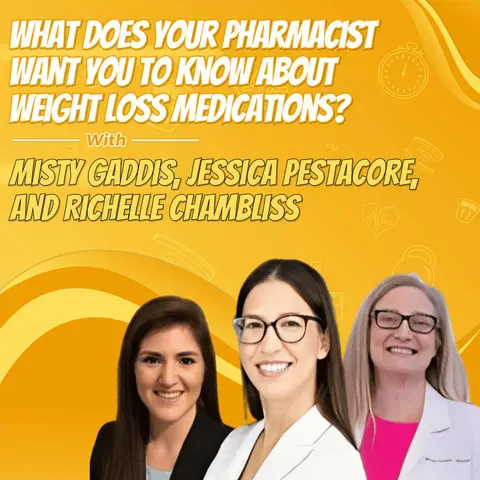
What Does Your Pharmacist Want You to Know About Weight Loss Medications?
Your friend just started semaglutide. She got it online; it's "compounded," it has B12 in it, and it's only $199 a month. Sounds like a great deal, right? But what exactly is in that vial, who made it, and how much are you supposed to take? More and more people are facing these questions every day, and most of us don't know how to answer them. Join Holly and Jim as they welcome not one, not two, but three guests for the very first time: Misty Gaddis, pharmacy manager of medication compounding s
147
Oct. 7, 2026
The Weight Comes Off Easy. Now What?
New obesity medications can now produce weight loss once thought impossible without surgery. That success is forcing doctors to ask a question they never had to face before: what if a treatment doesn't know when to stop? Join Holly and Jim as they unpack six new questions these next-generation drugs have raised in obesity medicine. Using a relatable patient case, they explore the difference between losing the maximum amount of weight and losing the optimal amount, and why those two things are n
146
Sept. 30, 2026
Losing Weight on GLP-1s: Are You Moving More or Less Than Before?
If losing weight made movement easier, wouldn’t you naturally start moving more? It’s the kind of assumption that feels almost too obvious to question: shed 40 or 50 pounds, and your knees stop aching, the stairs get easier, and you’re out there living more. Holly and Jim certainly believed it. But in the age of GLP-1 medications, where rapid, substantial weight loss is now common, does this assumption still hold up? In this episode, Holly and Jim put that belief to the test with real data. Div
145
Sept. 23, 2026
Are You Eating Healthier While Eating Less on GLP-1 Medications?
Everyone knows GLP-1 medications help people eat less. But does eating less actually mean eating better? It’s a question the weight loss field never really had to ask before, and the answer might surprise you. Join Holly and Jim as they dig into three GLP-1 studies looking at what people are actually eating. You’ll hear the real numbers behind diet quality, protein intake, and nutrient gaps on these medications, plus what it means for anyone currently taking (or considering) a GLP-1. Holly and
144
Sept. 16, 2026
Pop Quiz: What Do You Really Know About Keeping Weight Off?
Think you know what it takes to keep weight off? Most people can tell you how to lose weight, but ask them what actually predicts keeping it off, and the answers get shaky fast. That’s a problem, because losing weight and maintaining weight loss are two completely different biological and behavioral games, and confusing the two is one of the biggest reasons people yo-yo. In this episode, Holly and Jim put their listeners to the test literally. They’ve built a 20-question pop quiz covering every
Listen On


