From Food Noise to Clarity: Bill's GLP-1 Journey
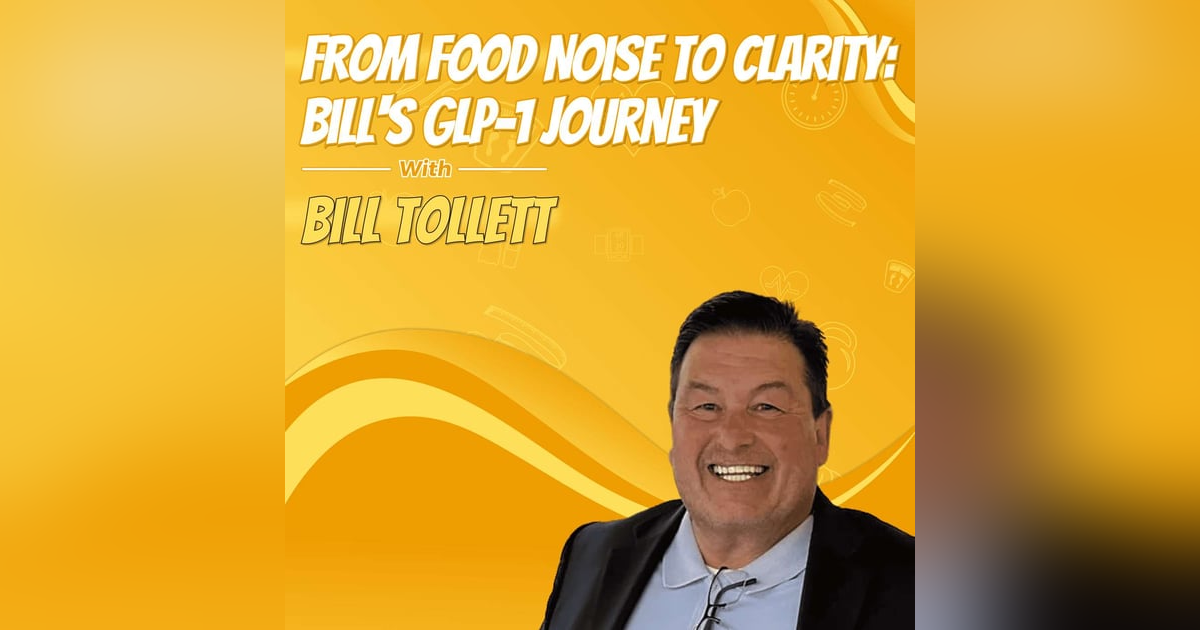






Weight loss isn’t just about the number on the scale. It’s about reclaiming your life. When you’ve been carrying excess weight for years, it’s easy to start accepting limitations as your new normal. Skipping events because of walking. Staying in the car while others explore. Wondering if you’ll see your future grandchildren grow up.
But what if the right support could help your body work with you instead of against you? What if losing weight didn’t have to mean constant hunger and willpower battles? Join Holly and Jim as they sit down with Bill Tollett, a former school principal and coach who lost over 120 pounds and rediscovered what living fully actually means.
This conversation goes beyond the mechanics of weight loss. Bill shares the mental shifts that surprised him most, the challenges of navigating insurance hurdles, and why he now describes himself as feeling “capable” for the first time in decades. Whether you’re considering medication, struggling with where to start, or simply curious about what sustainable change actually looks like, Bill’s story offers honest insights into a journey that’s transformed not just his body, but his entire approach to life.
Discussed on the episode:
- Why one doctor’s blunt comment became the catalyst for change
- The unexpected mental clarity that came with medication (and why it felt like being a superhero)
- How Bill built exercise into his day without joining a gym or running marathons
- The three different reactions people have when they see his transformation
- What “food noise” really feels like and what life is like when it quiets down
- Why Bill says this isn’t cheating, it’s “leveling the playing field.”
00:37 - Introduction to Success Stories
02:06 - Meet Bill Tollett
04:12 - The Journey Begins
06:17 - Past Weight Loss Attempts
07:29 - Discovering GLP-1s
09:07 - Initial Experiences with GLP-1s
11:51 - The Turning Point
16:08 - Daily Life Changes
17:21 - Reactions from Others
18:27 - Quality of Life Improvements
19:02 - Daily Eating Habits
22:09 - Current Weight Goals
24:35 - Mindset Transformation
26:34 - Overcoming Challenges
35:50 - Myths About GLP-1s
36:26 - Final Thoughts and Advice
James Hill:
Welcome to Weight Loss And, where we delve into the world of weight loss. I'm Jim Hill.
Holly Wyatt:
And I'm Holly Wyatt. We're both dedicated to helping you lose weight, keep it off, and live your best life while you're doing it.
James Hill:
Indeed, we now realize successful weight loss combines the science and art of medicine, knowing what to do and why you will do it.
Holly Wyatt:
Yes, the “And” allows us to talk about all the other stuff that makes your journey so much bigger, better, and exciting.
James Hill:
Ready for the “And” factor?
Holly Wyatt:
Let's dive in.
James Hill:
Here we go.
Holly Wyatt:
Today's episode is one of our favorites, one of our favorites to do. We're going to bring back the success stories, Jim.
James Hill:
Oh, love those success stories.
Holly Wyatt:
Yeah. These are real-life journeys that show what weight management actually looks like over time.
James Hill:
Yeah, we spend a lot of time talking about biology, behavior, treatment options, but nothing brings those ideas to life quite like hearing it from someone who's lived it. So, Holly, I want to introduce you to our guest today, and this is someone I've known for quite a long time. Bill Tollett has spent decades serving his community. He was a teacher, a coach, a school principal. He helped shape young lives and talked to them about leading with purpose. Along the way, he also stepped into the world of entrepreneurship, owning and operating a restaurant that brought people together around food and community. Like many people who dedicate themselves to others, Bill put his own health on the back burner for years. Over time, his weight began to affect his energy, mobility, and overall quality of life. But Bill decided it was time for a change. Since then, Holly, he's lost over 120 pounds.
Holly Wyatt:
Whoa.
James Hill:
Oh, but more importantly, he's built a new way of living that he's actively maintaining. And I know he's very excited about that. So today we're excited to hear not just what he did, but how his journey changed his life.
Holly Wyatt:
Bill, we are so glad you're here. And let's start at the beginning for our listeners. Give us just a little bit about how, you know, Where did this all start? What did you weigh when you began? What made you decide to go on this journey? Just give us a little bit of the backstory.
Billy Tollett:
Okay, well, I... I had to go, had to have a physical and I had a physical for my insurance. I started a job and I had to get a physical. So when I went into the doctor, I went through the normal procedure and the PA said, you know, she was very nice, very nice lady. And she said, “You know, I'm looking at these labs. You're extremely healthy for such a big guy, but I just want you to know it's not going to last.” And I had been putting up with some things like avoiding going to certain things where I knew I would have to walk a lot or just not really having the energy after I worked to do other things and to socialize. So I kind of felt like I was missing out. But more importantly, too, I was 61 years old and I was kind of having some old man thoughts, too. There's not a lot of 400 pound 70 year old men so I don't see many. So maybe I better start doing something too.
Billy Tollett:
So then I spoke to my wife and I said, “I think I'm really going to try to do one of these GLP-1 shots. A lot of people are having success with them.” And my wife was very supportive and she was like, “Yes, you should try that. It couldn't hurt. Insurance will probably cover it.” And so I went into it kind of like that. Just looking for, just to lose some pounds, to have a little extra energy. You know, my knees were sore, my hips were sore. It was just kind of one of those where, you know, let's try it and see what happens.
James Hill:
Before we get into what happened, Billy, let me stop you for a second, because Holly, I told you I've known Bill for a long, long time, and you were not overweight as a child. Talk a little bit about how the excess weight came on.
Billy Tollett:
Okay. Well, I was obviously, I was a coach. I was extremely active. I was athletic. I was active growing up all the way until probably to be honest, when I got my first, what I consider my real job as the assistant principal of the school. I mean, I always worked all my life, but when you're a coach, there's a little bit different kind of pressure than when you're assistant principal, not to mention the fact you have to dress up every day. You have a lot more job stress. Because when I was coaching, it was maybe a different kind of stress. But when I was an assistant principal and I became a school administrator, you deal with things, unfortunately, now like school safety and you deal with personnel issues and you deal with real life things that really take a toll on you. And that's what happened, I think, to me was gently and slowly. I just started picking up a few pounds every year, and so I pick up a few pounds and then you stop playing in the softball league, and then you pick up a few pounds and then you stop playing in the volleyball league, and then you pick up a few pounds and you realize you're staying in the recliner instead of getting out and playing with the dogs or attending your kids functions and things like that. And that's kind of what happened. It just slowly I started picking up the weight and picking up the weight.
Billy Tollett:
And then, Jim, when I got to the restaurant, that wasn't an environment that was really good anyway, because I ate a lot of fried food. I had to eat there. I ate a lot of stuff on the go. And it was just an enormous amount of hours, not proper rest and things like that.
Holly Wyatt:
Kind of the perfect storm, but a slow build, it sounds like.
Billy Tollett:
That's right.
Holly Wyatt:
Yeah. So you talk about that you decided that you wanted to go on one of the GLP-1s. Had you tried to lose weight in the past?
Billy Tollett:
I had actually reached out to Jim maybe a year or so before just to talk because I knew it was his business, just to talk. I had known for a while, but it's kind of like not necessarily maybe denial, but I just I hadn't really taken a major step. I said, oh, I'll start a diet on Monday or Super Bowl's coming. I'll wait till after the Super Bowl. And you find yourself pushing things off and pushing things off. But this was one where I decided that I was going to do this. And once we made the decision, I had no qualms or no regrets. My wife was on board, I was on board. And there's no stigma. There was no stigma for me to a GLP-1 or cheating or anything like that. It was more like a medicine for an illness that I had. Or what I realized was maybe this is how real people deal with food noise, or maybe this is how the normal people deal with food noise.
Holly Wyatt:
That's a very healthy way to think about it. And I think that's great insight. It's like, okay, now you were on the drug and suddenly you're like, maybe this is what a lot of other people who haven't struggled with their weight feel like.
James Hill:
Holly wants people who haven't experienced food noise to take a pill to be able to experience food noise so they know what it's like.
Holly Wyatt:
I think it would change a lot. These people that say keep still even now are saying, you know, yes, but, you know, you need to do these behaviors and it's cheating. And I'm like, you know what? I'm going to give you a pill and see how easy these behaviors are that you're talking about when you have food noise 24-7. But I haven't found it yet.
Billy Tollett:
And the mental aspect was just something that I was not prepared for whatsoever. I had no idea it would have such an effect on my decision making. And the things, you know, like I would step outside my body and I would say, you're opting to stop. You're 15 minutes early for work, so you're going to stop in this parking lot and walk for 15 minutes? That's just something that's so out of character for me to do, to just look for an opportunity to get 15 minutes of cardio in just because I'm walking. In my mind, I'm like, who is this person that's walking early in the morning? And it's like these decisions, it was really eye-opening to me for sure because I had not expected that for sure.
Holly Wyatt:
Yeah, I want to get into that, but I want to go back. I think our listeners are going, when you first started, the GLP-1s…
Billy Tollett:
Yes.
Holly Wyatt:
What was your experience? What did it feel like? Did you have side effects? Tell them what your experience was.
Billy Tollett:
I guess I would be considered a super responder because when I first started it, I had no side effects that I could even mention. And I just ate less. And to be honest, I really, I didn't have a lot of education about it to begin with. So like when I got it, it was like, okay, you're going to take one a week for four weeks. Then you're going to go up this month. You're going to go up this month. But I didn't really have a lot of, I didn't really know anything about it, to be honest.
Billy Tollett:
And all I know was it didn't make me hungry. So I still ate some of the same things, but I just ate less of it. I would get a few bites of something and I would say, man, it's really, I think I'm done here, and that's really what it did. It just totally curbed my appetite to begin with, which kind of gave me a little kickstart, which gave me a little omph in the right direction and it made everything else a little bit easier. So when I started, like the first month, I lost 24 pounds, but I didn't do any extra exercising. I didn't do anything. And I had a lot to lose. Now I had a lot to lose, but I just basically didn't eat as much. And it was, I mean, I hate to say it was that simple, but it was really that simple. I just didn't eat as much as I had been used to eating. I had made some choices where I might stop and get something to drink on the way home, a calorie-infused Coca-Cola or something, and I would skip that, orI would get coffee, or I would do something a little bit different like that. But the first couple months, it was just I ate less, and I just ate less. I didn't have a lot of side effects to even mention. A lot of things, for example, I didn't have issues with constipation. I didn't have issues with headaches. The only thing I really did was I made sure that I stayed hydrated. I did read enough to know that hydration was key.
Billy Tollett:
And then it was when I got to month three and I had then lost, I lost first couple of months, I lost 35 pounds and I didn't know really if it was the medicine or if it was just the fact that I had lost the weight, but my joints felt better. When I get up out of a chair, it's just a lot easier to get up out of a chair. I had added energy that I hadn't had before. And it was just kind of a strange feeling. I talk sometimes now and I speak that when I was on 7.5 milligrams, which was my third beginning of my third month, it was like a golden dose for me because I felt like a superhero.
Billy Tollett:
And again, I don't know if it's just because of the way the medicine made me feel or if it's because the added GLP-1s with what I already had affected certain things, but it just gave me all this energy. From that day forward, then I started looking into, oh, well, I should probably add more protein. It's important that if I'm going to lose muscle, I need to have some protein. And then it's like, oh, if I'm going to hydrate, maybe I could get a drink with some amino acids or maybe I had a good support staff with my family who would help me out and things like that. And so it was really that third month when I started doing some research on my own and I started saying, okay, let's take a look at this. And then I set a calorie deficit. I set some exercise goals. Then I had some protein, a protein goal each day. My hydration goals. And then I started just not, not a full blown app, but I started just charting my weight, charting my food and just kind of reflecting back on you had this much on this day, this much on that day. Then you put your week together and you're like, oh, I had a great week. And then you weigh. And of course it reflects in the scale. So it became more than just a number on the scale to me. It became, you know, I was feeling better. I was living better. And I thought, hey, this is something that I can sustain.
Billy Tollett:
I don't have to be big my whole life. Maybe this is something that I can keep going. And then it turned into a matter of not really discipline as much as just kind of it was an attainable goal that I was fortunate enough that I realized I was a 61-year-old man. So I'm not going to run a marathon, but if I could walk 12 miles a day, how much, you know, when I wasn't doing anything, how much better would that be? And if I could set something up to where I could do it every day. So it wouldn't be something that I dreaded doing, it would be something that I could set up every day. So when I started with the weights like a kettlebell and dumbbells on the patio, it was a simple. It was just something that I could do where I made sure I did it every day.
James Hill:
Wow. Holly, it's textbook. He's doing everything that we tell people to do to lose weight. It's amazing. We couldn't have scripted this better.
Holly Wyatt:
I agree. And it's interesting. You kind of did it yourself. It sounds like you then went out and did some research and figured out some stuff. Did your health care provider help you when they prescribed this drug or was it pretty much here's the drug, you're on your own?
Billy Tollett:
It was pretty much here’s the drug. They're supportive and they've helped me with some insurance things. So I'm certainly not saying anything negative about anyone. They've been very helpful. But I was on my own. And to be honest, social media, TikTok, I reached out to your podcast. I knew that it was Jim's business and that type of stuff. But TikTok, a lot of stuff on TikTok, you know. Some stuff you just got to filter through, but some stuff's good, some stuff's not. But there's a little community there and it was kind of a situation where I got some good ideas about certain things. And sometimes I wish that I had more from my physician because looking back, I went up every four weeks. I went up in dosage and probably now I could have had some success without having to go up so fast. So now after 11 months, I'm at the highest dose. And so what I feel like I'm going to do is I'm going to start reducing down either in the number of days or in the amount of GLP-1.
Holly Wyatt:
So tell us, you're at the maximum dose, how long have you been on the medication and how much total weight have you lost over that period?
Billy Tollett:
A hundred and twenty-seven pounds.
Holly Wyatt:
A hundred and twenty-seven pounds. And has that been about a year?
Billy Tollett:
I started February 3rd. So it's right out of year.
James Hill:
That's amazing. I want to switch gears just a little bit, Bill. So tell us how all this has affected your daily life.
Billy Tollett:
Well, I certainly have more energy by far. And I work a job where I feel better. And I look forward to getting up in the morning. And to be honest, I look forward, I can't be, I can't honestly say that I look forward to going on the patio and doing a little dumbbell routine, but I'm glad when it's over because I feel like I've accomplished something one more day because I've touched those weights every day. Now, it may be raining or it may be something or cold, but what I promised myself was I was going to do something every day. And then when I realized that I was losing the weight fast and it was up to me to maintain the muscle mass, then I decided that even a small dumbbell routine or a kettlebell routine would help me tremendously. And it has. So, to be honest, I feel stronger after losing 127 pounds than I felt in 20 years, maybe.
James Hill:
How are other people reacting to you?
Billy Tollett:
Oh, that's good. Now, that's really good because there's three different reactions. So, there's the first reaction where people my age, they, you know, are you healthy? Is everything okay? You've lost weight. They don't want to say something and have me have a bad illness or something, you know, so we have that one. And then we have the people that just do this look and they do the look and like they do a double take. And it's like, I know they want to say something, but they don't say anything. And that's about the best feeling because they they know that you've lost some weight, but they don't even know what to say. And that's it. That's a good one. And then we have the people that will say, hey, gosh, I know you've been working on it. You look great. What have you done? And I don't pull any punches about it. I think it's a miracle drug. And so I think everybody could benefit from it. So I say, yeah, I take a shot once a week.
Billy Tollett:
It helps me deal with the food noise. It helps me make good decisions. And I'll do it the rest of my life if there's not an alternative because it's been that life-changing for me.
Holly Wyatt:
So that sounds like the quality of your life has changed tremendously with this.
Billy Tollett:
Well, there's more opportunities for me. There's less things that I miss out on. Just for example, if there's an activity where I knew I was going to have to maybe do a whole lot of walking or something like that, it would be, hey, I'll just wait in the car or something like that. You know what I mean?
Holly Wyatt:
Yeah. Take us through a typical day. What do you eat now? You're still on the GLP-1s. Right? You're still on.
Billy Tollett:
Yes.
Holly Wyatt:
What does, I think our listeners might like to know, what do you typically eat?
Billy Tollett:
Sure. I start off in the morning with coffee, and I use a cafe latte protein drink that goes in my coffee. So I have a couple cups of coffee and half a protein drink in each cup of coffee. So I basically start today, 30 grams of protein before I'm out the door. And then when I get to school, I will have a protein drink, and then I'll have a hydration. My daughter will make me a bottled water with amino acid electrolyte drink and then I'll drink that at lunch. And when I get to school, I always walk when I get to school. So it's a good opportunity. I get there early. And so I can walk the halls before anyone's there. And my first assignment at my job, my first assignment is in a cafeteria, which is about a three or four minutes walk from where my classroom is. So what I do is I just make a couple laps before I get there. And then when I get it, my morning assignment, I check in on my watch and I log my cardio, my walking. My son and my daughter are both on my little app, and so it gives a notification that I've completed 12 minutes or 15 minutes or whatever the case may be. And so I kind of built that into where I don't have to make a special trip to go to the track and walk. I'm here. I got to walk up there anyway.
Billy Tollett:
Let's just extend the loop through these two halls and this hall, and then I'll add a little bit. And I try to do that again every day. And the walking has helped me the most because I could easily walk a mile anywhere without being winded now. I couldn't do that before.
James Hill:
So how do you handle, do you still eat out? Do you go to social events? Do you find that harder to deal with now?
Billy Tollett:
I still eat a lot of the same things. Every couple of weeks, my wife brings home pizza. Every couple of weeks, we have spaghetti with pasta. It's beneficial for me because I'm not really a sweet, like I didn't really get big eating Twinkies and cupcakes. It was more like potatoes and rice and those kinds of carbs like that. I like the protein. So it's easy for me to prepare some chicken breasts, put them in a bag. I have four ounces of grilled chicken breast where I can pull it out. I like the boiled eggs. I do ground beef. A lot of that stuff is easy for me to eat. And like I said, my family has been very supportive and with the food we cook for dinners and things like that. But we still, like, I just don't eat a whole medium pizza like I used to. I just eat a couple slices.
Holly Wyatt:
Yeah.
James Hill:
Interesting.
Holly Wyatt:
So are you still trying to lose weight? Are you maintaining kind of what is your current status?
Billy Tollett:
No, I still feel like I got about 40 pounds to go. And what I'm trying to do specifically is I'm trying to, I feel like I've, the 100-pound mark was, okay. I can get there. I can do it. I can do it. And then once I got there, I was like, okay, now I got to keep this off forever. Like, I got to find a way to keep this off forever. And then I was like, well, what am I going to do when I lose my final 40 pounds? Am I just going to stop? So what I wanted to try to do was lose it slower, as I'm building my muscle. It's a little bit, the process is a little bit slower, you know, trying to, some of the areas where I've tightened up my skin, things like that. And I feel like it's something that I can sustain if I just, I mean, there's no rush now to do it, you know?
Billy Tollett:
So I feel like if I can just continue with my plan and be consistent. What I've done is I've lost, I've never really had a week where I didn't lose. Sometimes I'm a super responder, I know that there's a lot of people it doesn't come that easy for. And so I'm kind of a diamond in the rough because it has been, I mean, it's been a major lifestyle change. Don't let me, I mean, I'm not trying to sell myself short, but I haven't had any side effects that caused me to miss work or anything where you hear my hair falling out or things like that. I've got loose skin, but I mean, I'm not going to be a swimsuit model. I'm 61 years old. If it's not a medical problem, I can handle it. You know what I'm saying? And so, those are the things that I can kind of work on, but continuing to be active and continue to move. And, you know, when I work with young people every day, I think it probably helps a little bit of my job because just to be honest, kids are honest, and they're a little bit, you know, they get close to me and stuff like that.
James Hill:
Wow, Holly, he's doing all the right things. I love it.
Holly Wyatt:
Yeah. And I love that he's kind of like preparing right now while he's on the drug and he may stay on it.
James Hill:
Yeah. He's thinking about the future.
Holly Wyatt:
He's thinking about what his end game is going to be.
James Hill:
Yeah. So, Bill, as you know, Holly and I have written a book that deals with lifestyle and avoiding the weight regain and we talk about three big buckets and you've hit on two of them very well, the diet part and the physical activity part. The other one we talk about is the mind, how you use your mind, and what we call mind state to approach life and how you're going to deal with challenges and everything. Talk a little bit about maybe how that's changed during your journey.
Billy Tollett:
It's changed tremendously in my journey, and that's been one of the biggest parts is the effect that it's been on my mind and my decision making. But then you start looking at real world things where you get up in age and you're like, well, what kind of quality of life am I going to have? Maybe I'll live, but will I be able to move and will my grandkids have to come see me in a hospital bed? What's the situation is going to be? So you start looking at it different. Like in my family, funerals and cemeteries are very important. And so you think about things like that just because that's the family that I'm in. But I started thinking about those things because I started thinking, well, I'm overweight. I'm this old. Something's going to get me sooner or later, I better be prepared. And now with the mind, I'm thinking more of long, okay, I want my few years, no matter how many years they are, maybe I could live to be who knows how long I could live. But the quality of that life living on is what it's done in my mind. It's made me feel like, hey, you can get out there and continue to live. There's no reason to throw it in now, you know?
James Hill:
So you talked about the fact that it's been relatively easy for you and you've responded really well, but there are probably good days and bad days. And on the bad days, what is it that gets you through those days when, when it's not as good as some of the others, things may not be going as great as usual?
Billy Tollett:
I tell you, when you grow out of clothes, when you get rid of your clothes and you go down a size and you're wearing things that, you know, like I don't have anything, anything that I wore last year. So like all new clothes. And so that's the thing that gets you through. It's like when you're having a bad day and the scale's not looking like it should but hey, look, I just threw away a closet full of clothes. I'm in this size now. I don't have to go to the big and tall shop anymore, you know, things like that. Those are the types of things that really get me through.
Holly Wyatt:
So as you move forward, and eventually, sounds like you have a goal to lose some additional pounds, but eventually you'll be at a place where you won't lose weight anymore, and the medication will still be working, correct? I mean, the medication's not just about losing weight. It will produce a certain amount of weight loss in an individual, and you don't know for sure where that will end for you, but then you'll just be maintaining the weight you're at. What do you think is going to keep you going then? When the clothes aren't changing, when you're still doing what you're doing, but nothing's different.
Billy Tollett:
Well, hopefully, one of these days I'll have some grandchildren and it'll be an opportunity for me to be active with my grandchildren. I'm not really looking for a final number anymore. There's not a certain weight that I want to weigh anymore. It's more about how I feel and it's how I feel in my body. It's not necessarily like I told Jim before, you know, knowing that I can walk a mile without being winded is a good feeling because two years ago, I don't know if I could have done that, and now I can. And so it's the fact that I'm not going to be missing out on life. I'm going to be living life and I'm going to be living it the way I want to live it. And I don't want to miss out on certain things.
Holly Wyatt:
Jim, sounds like he's kind of got the living large going that we talk about in the book.
James Hill:
I got to tell you, I mean, we didn't script this, but we could have because he's hitting all the points that you and I talk about.
Holly Wyatt:
Yeah, I agree.
Billy Tollett:
And I've had a positive attitude, a positive attitude to the whole thing. Like a lot of times I will, you know, people will reach out to me and ask me some questions and things. I didn't have a checklist for side effects. I don't look for hair loss or I don't look for nausea or these things. I don't. I look to have a good day. Hey, I look for the good things. And I think that's a big part of it too. And life's going well for me. I had a business venture that we were able to sell and get out of and kind of get our money back from. We did an entrepreneurship where we wanted to do something for a long time and we did it. And so now that's behind us. And I'm working in a school where I'm comfortable and I'm teaching. I'm working with young people. My wife has a job. And so my children are both doing well. It seems like life is good for us right now, you know. And so that's definitely positive.
James Hill:
So, Holly, I think it's time for your rapid fire questions.
Holly Wyatt:
Yeah, yeah. But I want to do one quick.
James Hill:
Okay.
Holly Wyatt:
Do you plan on staying on the drug for the rest of your life?
Billy Tollett:
I wouldn't be opposed to staying on the drug for the rest of my life. It just depends on how I feel. And I would be the judge of that. I will tell you this, there's a mental alertness. I mean, I felt like there's a focus that I get with the medication. And a lot of people don't always talk about those things. But again, and maybe I'm not as old as Jim, but I'm 61 years old. IYou got to take a look at these things, you know, and it's like when you hear these commercials about grandpa's starting to forget things and this kind of stuff, you know, and it's like, I've never really felt better, you know. And I told my eye doctor, this is kind of crazy, but I told my eye doctor, I think my eyesight's getting a little bit better. Now, I've never really heard that.
James Hill:
Well, we had to do some clinical trials there.
Holly Wyatt:
Oh, man.
Billy Tollett:
I never heard, but I mean, you know, it feels like when I, or maybe my eyesight as when I was at my heaviest, maybe my eyesight was a little bit worse or maybe there was some, who knows, extra pressure or something like that. But anyway, it's just one of those things. But I would not be opposed and I would not be, I mean, I'm not saying either way, I will just have to wait and see how I feel. I hate to put myself in a box.
Holly Wyatt:
That's a great answer. All right. I'm ready now for the rapid fire.
James Hill:
All right.
Holly Wyatt:
Jim, do you want to do them? You can do them.
James Hill:
Holly loves this part.
Holly Wyatt:
I do love this part. This is my favorite part. So Bill, I'm just going to rapid fire some questions. First thing that comes to your head, and we'll go through a series of them. First one, one habit you couldn't live without now.
Billy Tollett:
Oh, the morning walking, the walking for sure. I just feel when I'm done, when I'm finished, it just gives me a good feeling for the day. And it just helps me start my day off right.
Holly Wyatt:
Love it.
Billy Tollett:
But definitely the cardio in the morning.
Holly Wyatt:
Okay. A food that you like now that maybe surprised you.
Billy Tollet:
Well, I mean, as much protein for sure, like the chicken and I eat a lot of chicken, folks, a lot of chicken and eggs. But I mean, but the protein, I'm going to say protein because it's easy for me to get 200 grams of protein because I like it. I like the food.
Holly Wyatt:
Biggest non-scale victory?
Billy Tollett:
I don't know. The clothes, a whole new closet is certainly a good one and getting out of the big and tall shop.
James Hill:
You get to buy all new clothes I bet your wife was jealous.
Billy Tollett:
Oh, she can buy clothes. Don't you worry about that. She's good at that. But getting out of the big and tall shop, I guess, you know, all new clothes.
Holly Wyatt:
Okay. Hardest moment on your journey.
Billy Tollett:
I went through a little couple of days where I really had a hard time because my insurance had canceled and was forcing me to go on another medication. And it was one of those where it really frustrated me. I could use a couple other words, but I would rather just say frustrated.
Holly Wyatt:
Got it. Got it.
Billy Tollett:
And I was ready to stop. I mean, I was ready to quit. I was ready to just say, okay, I've done this enough. I can do it without it. I don't need it. I'm not going through this. You know, they're not my doctor. They really shouldn't tell me what medicine to take. They want me to take a drug that could be cheaper. And I know that's not what we're talking about now, but it was a bad time for me because I just said, you know, they shouldn't be able to do this to me. I'm not going to do anything. I'm going to be done with it and I'm going to just let the chips fall where they may. So I spent about, it was about three or four days there where I was in limbo, where I wasn't going to do anything. And then my wife said, “Well, hey, you know, this is what they suggest. You should at least give it a try.” And I tried Wegovy for two months. And I wasn't in the right mindset, to be honest, about the Wegovy. And it kind of gave me a little opposite of the Zepbound, gave me a little brain fog, and that I didn't like at all.
Holly Wyatt:
Interesting, though. Interesting how the mind state you go into something with, I do believe, can have an impact. So you didn't really want to have to switch drugs. You were really kind of pissed about it, and I understand why completely. And I love that you're aware that that might have impacted how the drug worked for you.
Billy Tollett:
Oh, because a lot of people have great success.
Holly Wyatt:
Yes.
Billy Tollett:
With Ozempic, Wegovy, they have a lot of success with it.
James Hill:
Yeah.
Billy Tollett:
And a lot of people have great success with Mounjaro and Zepbound. I felt like I had found the golden ticket.
Holly Wyatt:
Yeah.
Billy Tollett:
And it was like, whoa, whoa, whoa, whoa, whoa, whoa, I'm doing well. I'm checking in. I'm doing what I'm supposed to be doing. And you just get a notice that says, oh, you're going to have to do this medicine instead. And my doctor was saying, no, no, we don't want to do that. But there was a whole process where I had to go through the two months in order to get.
Holly Wyatt:
I think this whole, your whole journey really shows the power of the mind in so many ways, Jim. I mean, if you're seeing this, it's amazing.
Holly Wyatt:
Here's a couple more. One myth about GLP-1s you think people get wrong. Something that people say about it, maybe you hear out on TikTok that you don't think is right.
Billy Tollett:
Oh, that it's cheating. It's a magic pill that there's no effort. There's effort. You still have to have effort. For me, it's just like your biology is in the right place, you know? So it's like your brain and your cravings are finally working together on the same team instead of against each other.
Holly Wyatt:
Yeah.
James Hill:
You say it's not cheating. It's leveling the playing field.
Billy Tollett:
That's right. That's right.
Holly Wyatt:
You still got to go out there and play.
Billy Tollett:
That's right. You still do.
Holly Wyatt:
Yeah. All right. Last one. One word that describes how you feel today.
Billy Tollett:
I feel capable. I feel like I've achieved something that very few people do. Fortunately, more people are doing it now with the GLP-1 medications. But I feel like I've achieved something that a very small percentage of Americans, lose over 100 pounds and keep it off. And my goal is to keep it off. I still have goals, but I feel capable that I can do it.
James Hill:
Bill, what surprised you the most about your journey?
Billy Tollett:
What surprised me the most about my journey was probably how I bought into it like a religion almost. After the second month, when I started the third month, it was like everything was firing together, working for me like I was motivated to exercise. I was motivated to add protein to my diet. I was trying new protein drinks, maybe drink a protein drink instead of grabbing a Coca-Cola or something like that, you know. So, that for sure.
Holly Wyatt:
Yeah. So, people that see you, you talked about different reactions that people give you. What do you think people who maybe aren't listening to this podcast don't really get your whole story, but just see you maybe a year later and see that you've lost a lot of weight, what do you think they probably maybe get wrong, that they might maybe misunderstand or assume maybe that isn't correct about the journey?
Billy Tollett:
Maybe they assume that I had a surgery or they assume that something happened unpleasant to make me do something like this. I guess that in particular. I'm in the public eye. I was a principal. I was oftentimes in front of a lot of people speaking. I'm currently the vice mayor of the city. I'm also running for county commissioner of Rutherford County. I'm out in public a lot so I see people and you know it's just that they would think that I would have some kind of a surgery or do something like that.
Holly Wyatt:
Anybody try to sabotage you?
Billy Tollett:
No, I don't think any. Oh, the insurance company. But other than that, no. I mean, I've had, like I said, I've got a great…
James Hill:
Had a lot of support.
Billy Tollett:
A lot of support for sure.
Holly Wyatt:
Got it.
James Hill:
Okay. So I'm going to do one quick sum up and then I have one more thing to do. So, I think, Bill, your story highlights a few things that Holly and I talk about a lot. First, that weight management is about much more than just willpower. Second, tools like these GLP-1 medications can open doors, but long-term success comes from building habits and a mindset that you can live with. And third, that real success is measured in quality of life, not just a number on the scale. And here's the final thing I want to do. Bill, there are a whole bunch of people out there, hopefully many of them are listening, that like you were before you decided to do something, take about one minute and talk to those people.
Billy Tollett:
There's no harm in trying. I would like to say to you, give it an opportunity. Give it a try. You've obviously tried other things before in the past, just like I have a hundred different kind of diets, a hundred different kind of things. I would say, give this an opportunity. When your body is working together, it has a much greater chance for success. And don't listen to the people that complain about the side effects, because you just don't know, everybody's journey is different. And so, you really don't know if you're going to have side effects or not have side effects. And that's something that, to me was well worth the risk.
Billy Tollett:
Now, fortunately, I didn't have a lot, but to me, it would be, you know, I might even say, hey, at least give it a shot and see if it will work for you. Because it could even just give you the boost. Like for me, the first month when I lost up around 25 pounds, everything felt better. And so then it was like, then it was easier for me to do things. It was easier for me to be active. It was easier for me to burn calories because I just felt better. And I didn't need a whole year to feel better. Like, to be honest, like when my feet would swell, when I lost 17 pounds, all of a sudden my feet were like a 20-year, my feet were normal. So that, fix that right there. I would just say you should give it a try because really and truly, I have never heard of any kind of an effect that it wasn't temporary anyway. So, even if there was a side effect, it was a temporary side effect. So, I mean, you know, if you have a little constipation, you take some extra fiber or whatever, you know. But I would just say for people that are out there, it's your journey. It's personal to you. It doesn't matter how it gets done. It's just getting it done. And if you have friends that are pushing you in the wrong direction, then they're probably not your friend. And if you have friends pushing you in the right direction, then you're lucky.
James Hill:
Great.
Holly Wyatt:
Love it. Thank you, Bill. Thank you so much for coming on and sharing your story. Thank you for trusting us and our listeners. I do believe that by sharing stories, it can help so many people because you're living these things that we talk about. So, conversations like this matter.
James Hill:
They do. And thank you, everybody. And we'll see you next time on Weight Loss And.
Holly Wyatt:
Bye, everybody.
James Hill:
And that's a wrap for today's episode of Weight Loss And. We hope you enjoy diving into the world of weight loss with us.
Holly Wyatt:
If you want to stay connected and continue exploring the “Ands” of weight loss, be sure to follow our podcast on your favorite platform.
James Hill:
We'd also love to hear from you. Share your thoughts, questions, or topic suggestions by reaching out at weightlossand.com. Your feedback helps us tailor future episodes to your needs.
Holly Wyatt:
And remember, the journey doesn't end here. Keep applying the knowledge and strategies you've learned and embrace the power of the “And” in your own weight loss journey.



